A legacy of craft at Newport Pagnell
In 1954, David Brown bought the Tickford works, and a year later Aston Martin moved its road car production to Newport Pagnell. From that point on, Aston Martin Works became shorthand for beautifully hand-built British cars, made with care, skill, and quality. In 2024, the site marked 70 years of Aston Martin production, adding to the history of Newport Pagnell’s association with craftmanship.
Newport Pagnell was never a place of rushing conveyor belts or anonymous, standardised parts. It was a workshop defined by patience, judgement, and the highly trained hands of their employees. Car panels were shaped and finished one at a time, relying on skills that couldn’t be fully captured in drawings or measurements. This wasn’t something you picked up quickly. The ability to master this skill took years, and craftsman started young.
Many apprentices began their working lives here, learning the craft of metalwork and engineering from the ground up. One of them was a young man named Philip Davey who became an Aston Martin employee in the 1950’s until his retirement in 2001. Like others before him, Phil didn’t start by building cars. He started by learning how to make the tools.
At Newport Pagnell, the tools themselves were part of learning the craft. Hammers, dollies, stakes, and formers were often made for a single curve or edge. You couldn’t buy them — you had to make them!
Before Phil ever shaped a body panel, he had to create his own tools from raw steel, filing, grinding, hardening, and polishing them by hand. In the process, he would have been taught how to bend metal, how to manipulate it and form it. A badly made tool could have shown its flaws instantly in the aluminium, so it was essential he was prepared.
On the shop floor, skill was easy to spot. Experienced panel beaters could recognise each other’s work just by looking at a surface or following the line of a curve. Much of what apprentices learned was never written down: how to read light across a panel, how to hear when a hammer strike was right, how to correct a mistake without leaving a trace.
That way of working fostered deep loyalty. Many people spent decades at Newport Pagnell, their individual contributions woven into the character of the place itself. Cars moved through small teams who knew and trusted one another’s work, and who felt responsible for the whole vehicle, not just their own part of it.
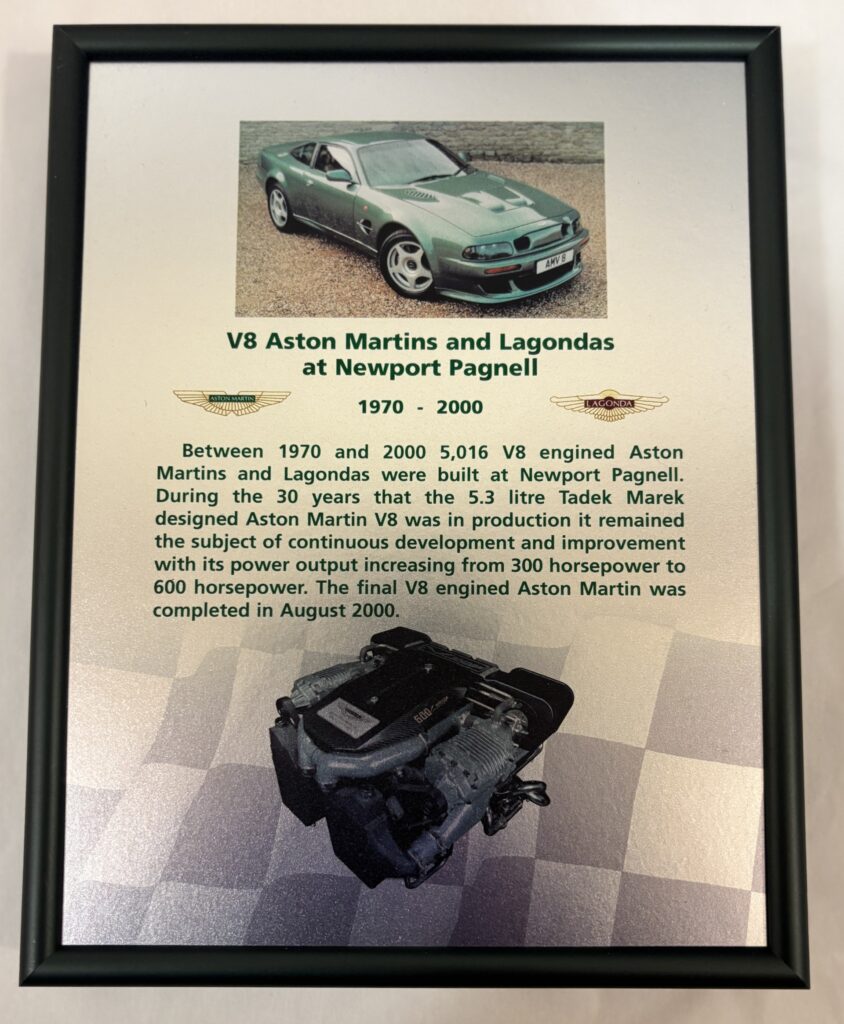
Phil Davey’s career was also closely tied to one significant element of Newport Pagnell’s achievements, the Aston Martin V8 engine. Built on site for 30 years, the V8 became a defining feature of the marque, and Phil was one of the engineers who worked on it during its life. In 2000, when the final V8 engined Aston Martin was completed at Newport Pagnell, Phil was presented with a plaque by Aston Martin Lagonda. Given with grateful thanks, it marked the end of an era and commemorated three decades of V8 engine production, not forgetting the people on the ground whose skill sustained it.
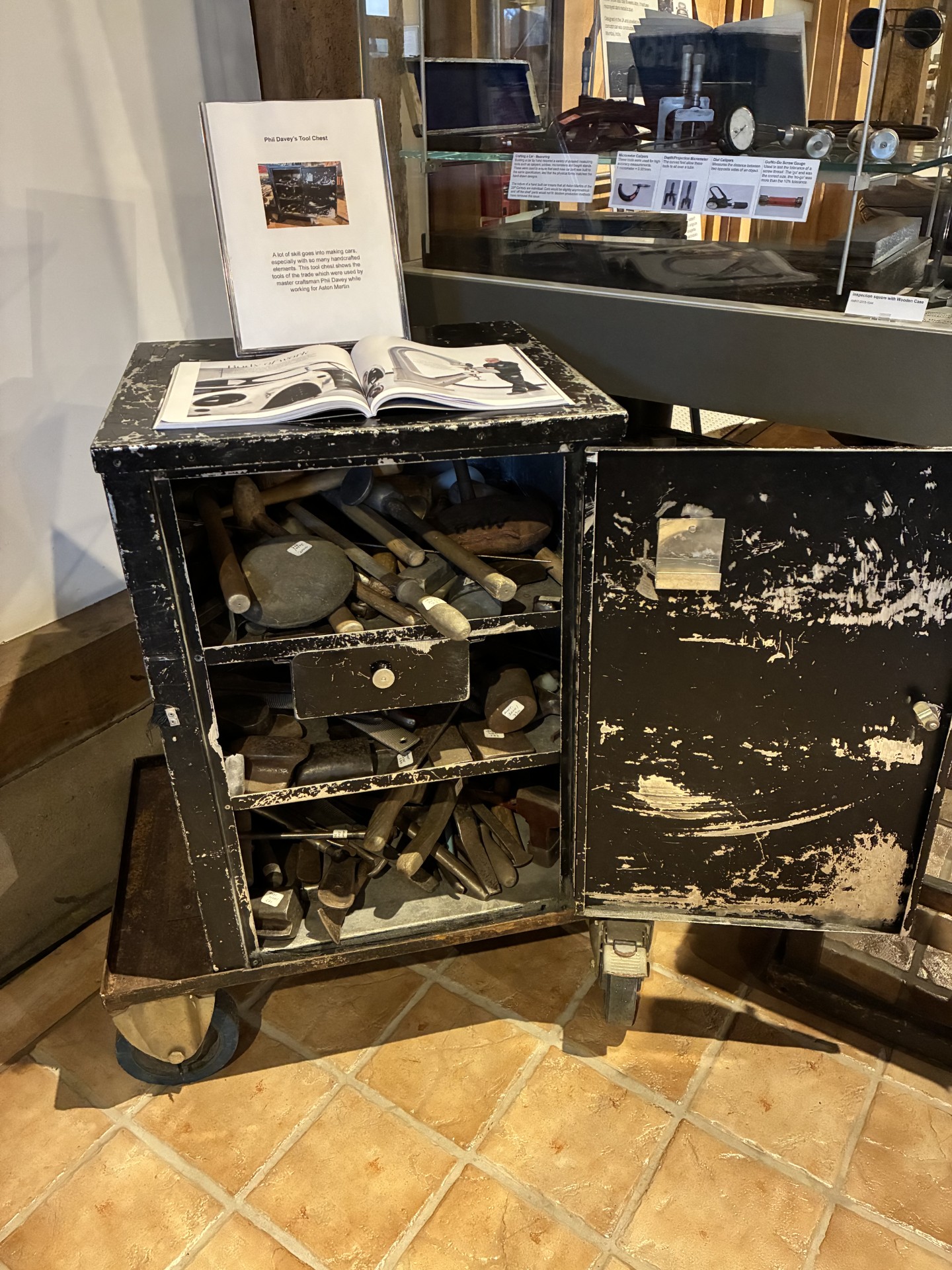
Today, that human story is being carefully preserved. The Aston Martin Heritage Trust now looks after Phil Davey’s complete tool chest, donated by his family in 2020 after his death. The tools are in the chest, made by Phil himself as an apprentice!
These modest objects amongst the impressive cars and engines on display, speak volumes about the foundations of the company. They are a legacy of the work that goes on behind the scenes. Alongside the plaque, they remind us that Aston Martin’s reputation was built not just on design or performance, but on the lived skills of its workforce.
By preserving these objects, the focus shifts back where it belongs: to the craftsmen and apprentices whose care and consistency defined Newport Pagnell day after day. As we celebrate the site’s long history and its 70 years with Aston Martin, it is the lives and labour of the workers, like Phil, that show the level of commitment and skill needed to keep the reputation of Aston Martin.
Written by: Clare Hirst, AMHT Collections Manager.
The tools chest is on permanent display at the Aston Martin Heritage Trust. To book a tour, follow this link. Plan a trip to Wallingford’s AMHT Museum.
Images of Phil Davey Plaque and Tool chest