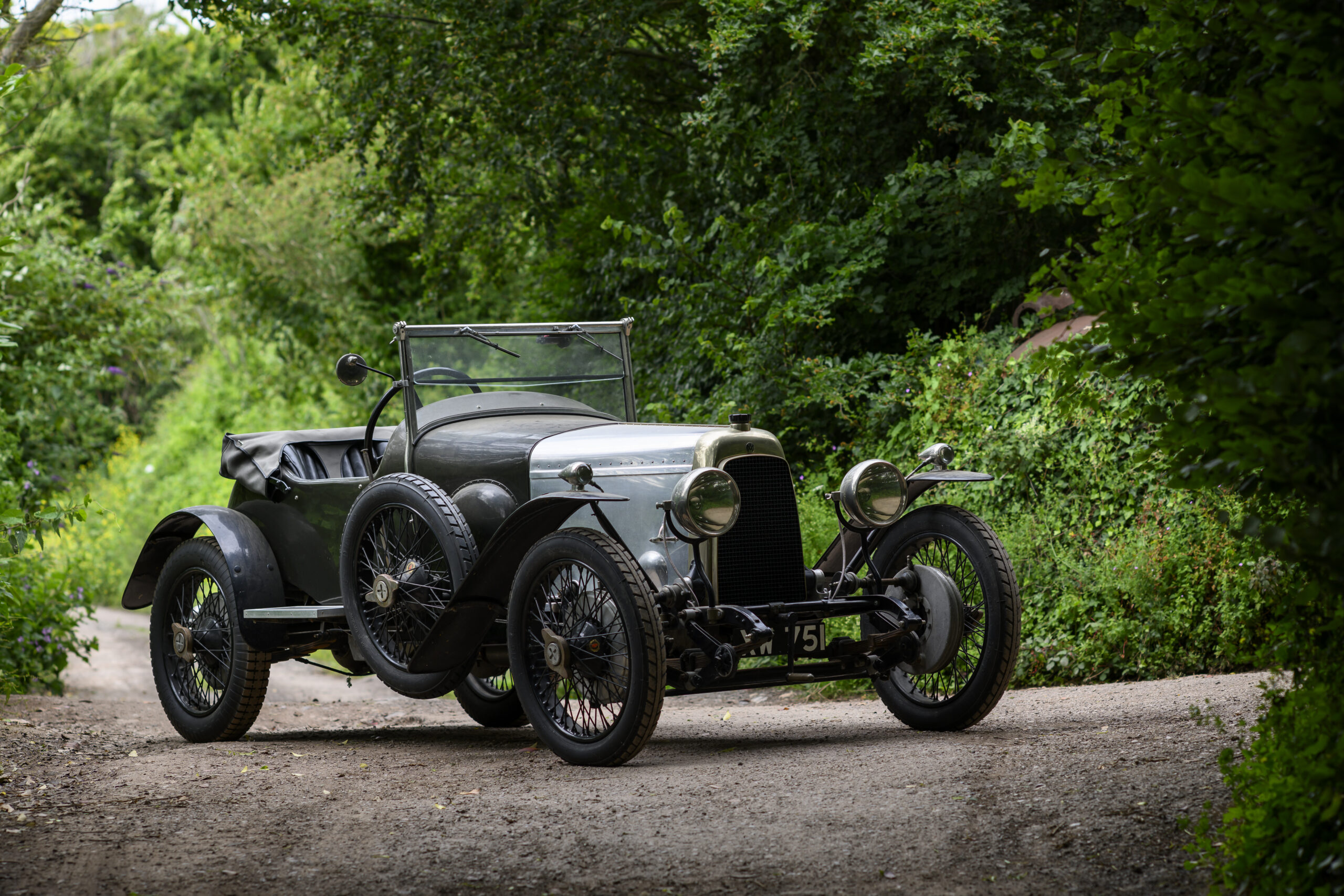
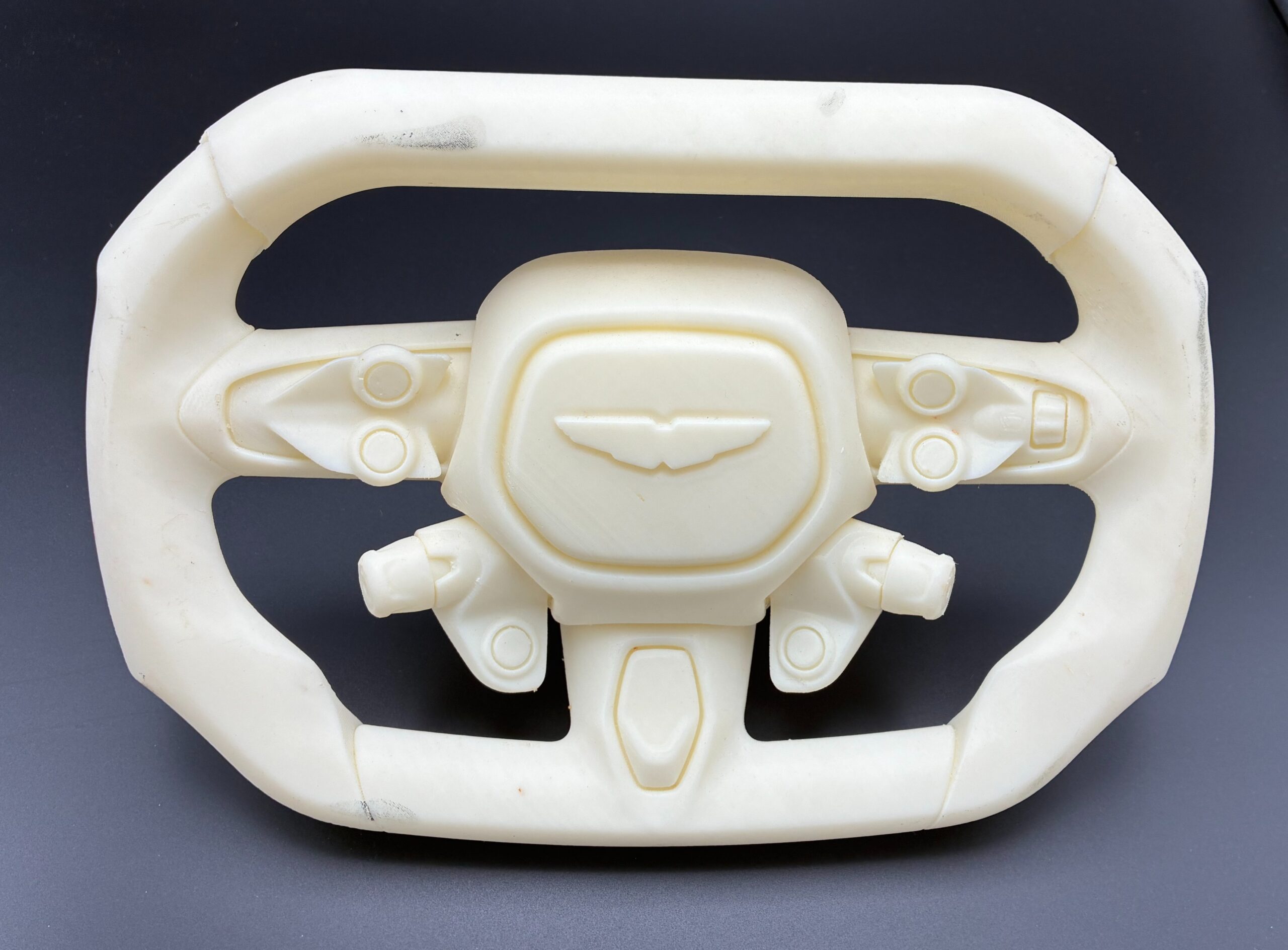
Last year we were lucky to add some brilliant photographs of Aston Martin’s motor show stands to the collection.
They came to us from the collection of the late Tony Nugent who was Sales Director at AML from the late 1970s to the 1980s. We’re working through these photographs at the moment, identifying the motor shows and the people, and what is brilliant about them is the insight they give us into these events.
While I can imagine all the work and preparation that would be needed for these shows, the photographs also demonstrate just how much fun was had. We can learn so much from them, from seeing the layout of stands and their royal and famous visitors, to recording the launch of famous models.
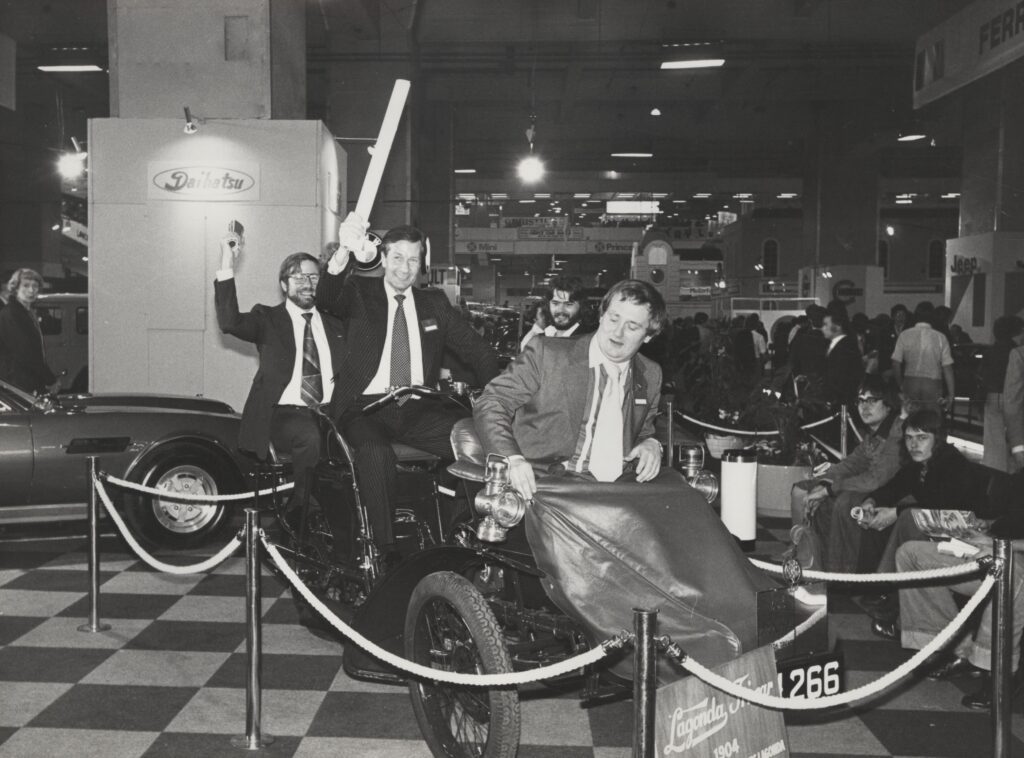
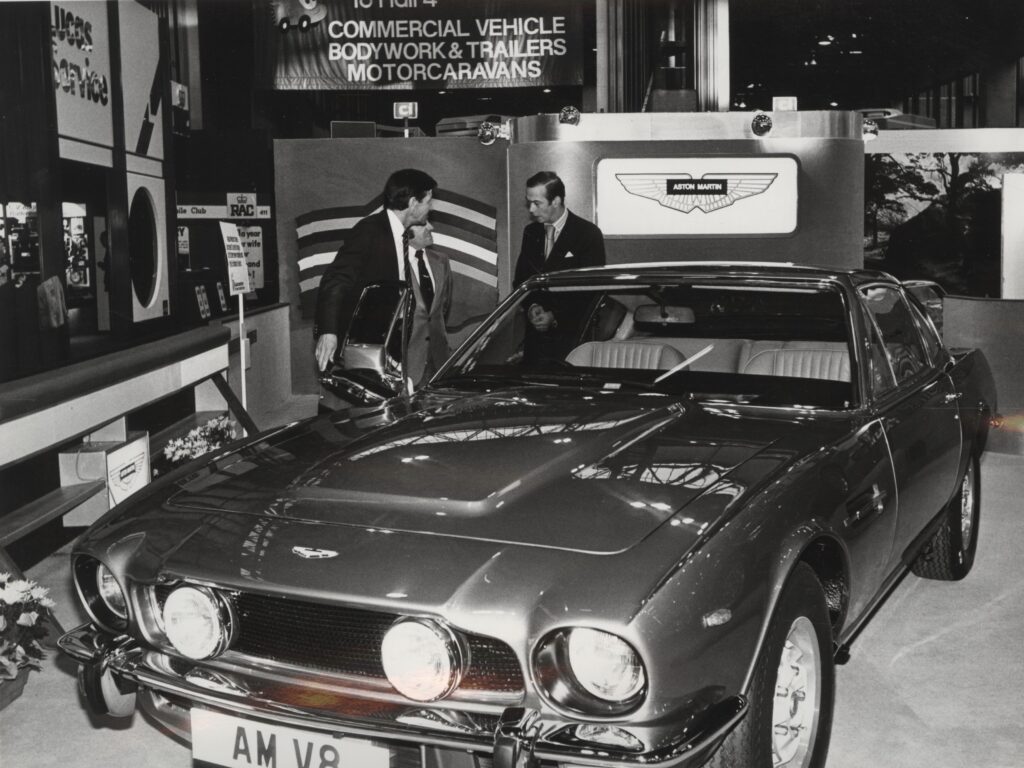


They reminded me of some very early motor show images that we hold and got me thinking about the event’s history and how Aston Martin’s stands have changed over time.
The Society of Motor Manufacturers and Traders held the first British International Motor Show at Crystal Palace, in south-east London, in 1903 – the same year that the speed limit was raised from 14 miles per hour to 20 miles per hour(!) by the Motor Car Act 1903.
It became an annual event, traditionally held in October, which went on to be based at various London venues. From 1905 to 1937 it took place at Olympia and then moved to the Earls Court Exhibition Centre until 1976.
The earliest motor show image we hold dates to 1927 and shows the first cars to be built at the Feltham factory – those in the middle and on the right of the image.

From 1939 to 1947 motor shows were suspended as a result of the Second World War. The image below is of the 1938 Earls Court Motor Show, the last to be held before war began. In the foreground is the "Flying Banana", the first of the Type C Speed models, nicknamed for its striking yellow and green colour and streamlined shape.


From 1978 shows were held every other year at the National Exhibition Centre (NEC) in Birmingham, where they were based until 2004. It is these early NEC motor shows that the majority of our newly acquired photographs relate to.
Motor shows have continued at other locations since leaving the NEC (and there is also of course a strong international presence which we haven’t looked at here), yet no matter what the year or where they are held, their popularity and standing as a place of pilgrimage and excitement does not seem to have dwindled.
We can read the atmosphere and enthusiasm in the photographs, and get a feeling of what it was like to be one amongst hundreds jostling to see a favourite or latest model. While there aren’t many of this type of photograph in the collection, they have been a great addition and capture some of the magic of the motor show.