As this year marks the 30th anniversary of the DB7, we’re shining a spotlight on it with our newest temporary exhibition, DB7: ‘The car that saved Aston Martin’?
‘A Legend Reborn’ was quite a proclamation to have graced the cover of a 1996 DB7 sales brochure, and what a prophecy to live up to.
Whether you are a DB7 fan or not, there is no denying that it is a special car.

Unveiled to the world at the Geneva Motor Show on 2 March 1993, the DB7 was an instant hit and won 'Car of the Show'. Modern for its time and believed by some to be one of the most beautiful British cars ever made, they started arriving with customers in 1994.
What I hadn’t realised before I started researching the DB7, is just how many models and limited editions had been made. By the end of production in 2003, the DB7 had become the best-selling Aston Martin ever, with 7,117 cars completed.
By December 2003, one in every three Aston Martins was a DB7.
It appears there are many of the opinion that without the success of this car, AML would have struggled to survive into the 21st century. A view which has led some to refer to it as ‘the car that saved Aston Martin’. Though it could be argued that other models have done this for AML over the years, DB7 production did help AML with the economic climate they were faced with at the time.

With such a wealth of DB7 information and model variants there has been that familiar challenge, though enjoyable, of fitting in as much as possible to make sure we capture the full story. While still being able to fit it on our A1 sized display boards!
I have loved some of the facts I’ve found out about the DB7. Did you know, for instance, that at the time the DB7 i6 had the widest variety of factory standard and optional wheel styles ever available on an Aston Martin? Or that the DB7 V12 Vantage was the very first production Aston Martin ever to be fitted with a V12 engine?!
There are so many other interesting facts that feature in the exhibition, so if this has whet your appetite you know where you can find out more when it opens in June!

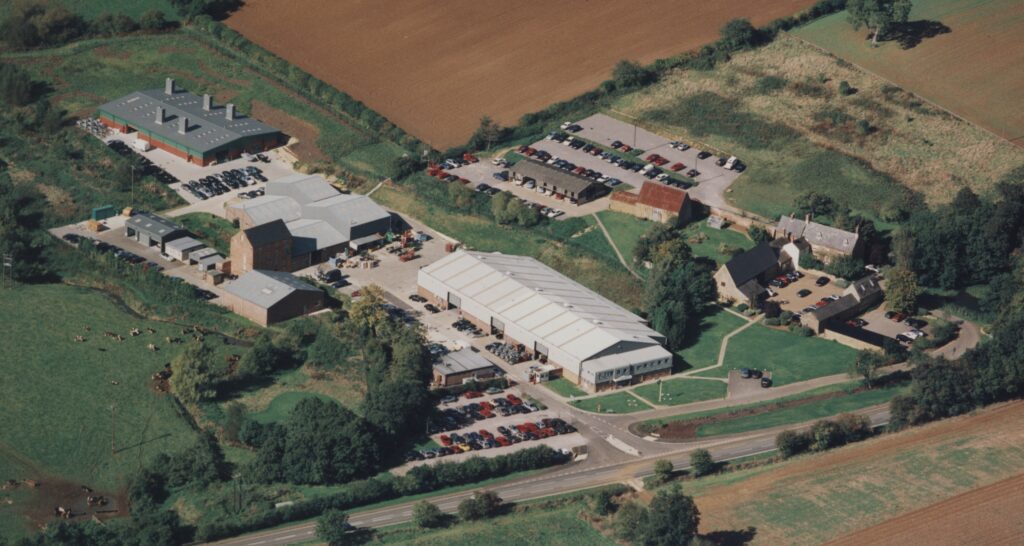
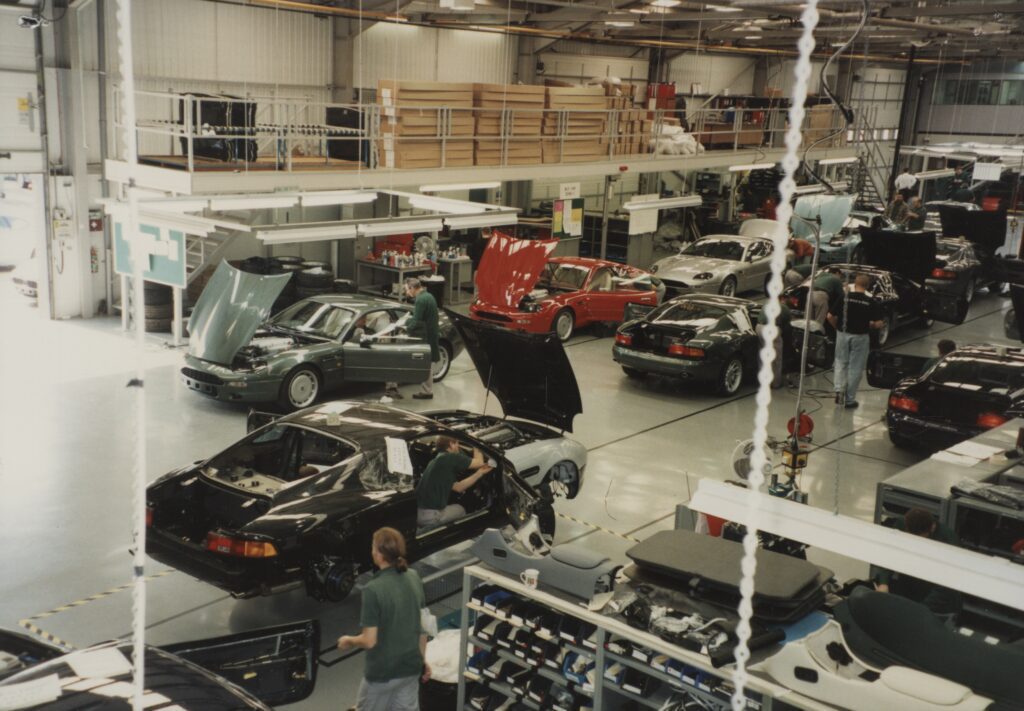
We’re also looking into the backstory and creation of the DB7, from the role played by Tom Walkinshaw Racing (TWR) in its development, to Ian Callum’s design and the factory site at Bloxham. It was here that the entire range was built, except for the DB7 Zagato and DB AR1 whose chassis were shipped to Milan for Zagato to hand fit the body panels. The site at Bloxham had previously been used by TWR to build the Jaguar XJ220 supercar and the link to Jaguar is also explored.
I’m very excited that as part of this we will have on display the DB7 i6 prototype manufactured for the 1993 Geneva Motor Show. The car features a sun roof, which does not appear on the production version of the DB7, and has a statement Oxblood and Parchment leather interior. It will be the first time it has been in the museum for many years, what an opportunity to get up close to it!
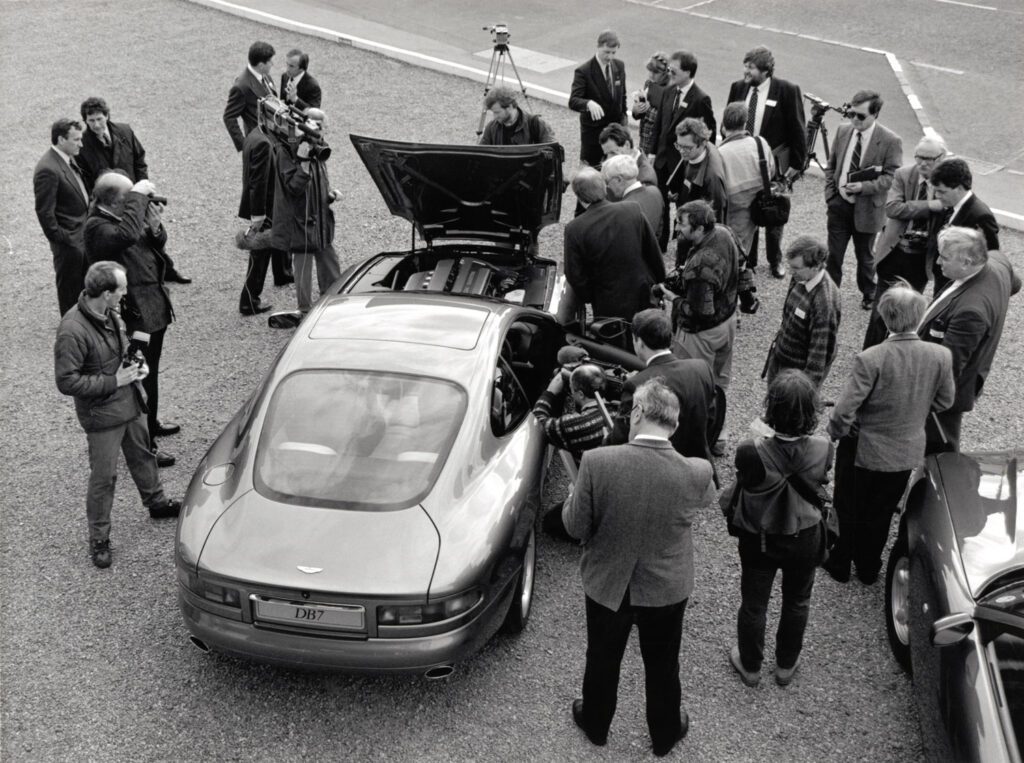
‘A Legend Reborn’? The legend continues…
DB7: ‘The car that saved Aston Martin’? will be on display at the AMHT Museum from June to December 2024.