History doesn’t always survive in big, obvious ways. Sometimes it turns up in small, personal things, such as objects that someone kept, carried, and clearly thought were worth holding onto.
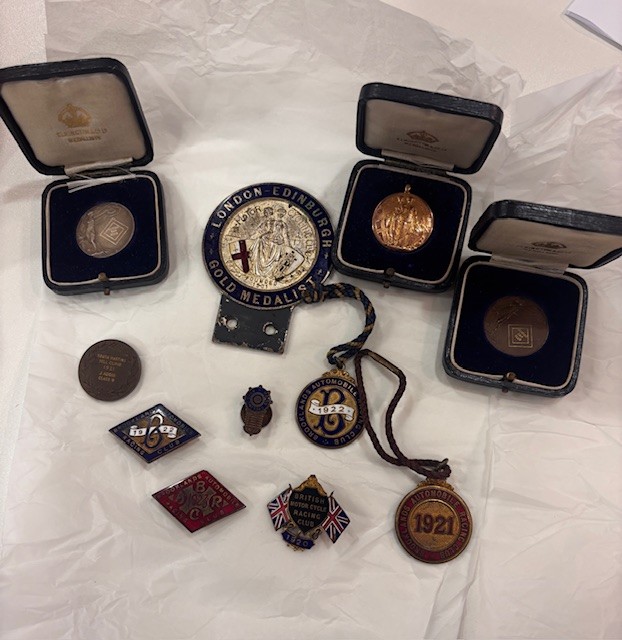
The Aston Martin Heritage Trust has recently acquired a group of items belonging to Jack Addis, one of the early engineers at Aston Martin. They came to us via a donor in New Zealand, who had inherited them from Addis’s granddaughter. That kind of direct link is rare, and it makes these objects feel a lot more special due to their provenance.
Among the group, which is largely made up of medals and badges, two pieces stand out to me.
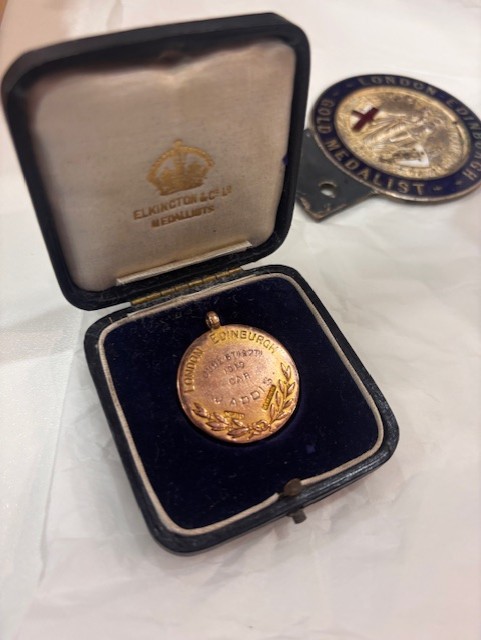
A gold medal from the 1919 London to Edinburgh Trial.
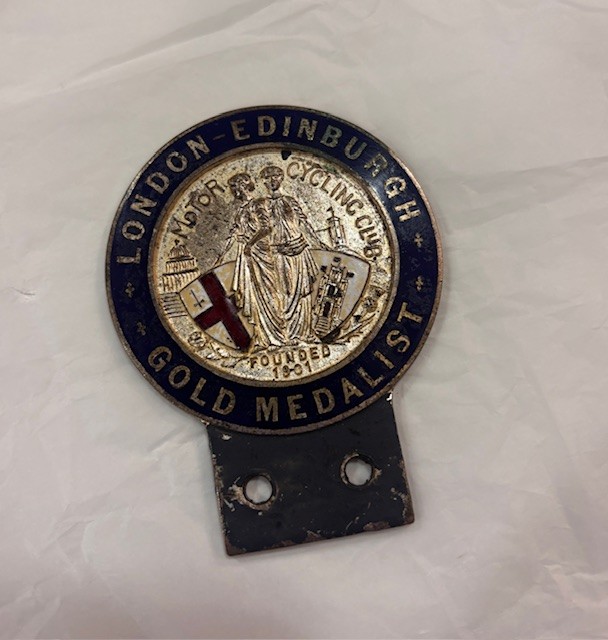
And a bumper badge inscribed: “Gold Medallist – London Edinburgh – Motor Cycling Club.”
They are not large or especially showy, but they mark a moment that mattered.
Jack Addis born in 1882 and died in 1942, was present at the very beginning of Aston Martin’s story. By 1913, he was working at Hesse & Savory’s workshop in Henniker Place, London, when Lionel Martin took over. Addis remained and quickly became a key part of the operation, maintaining Martin’s Singer race car while also helping to develop something new.
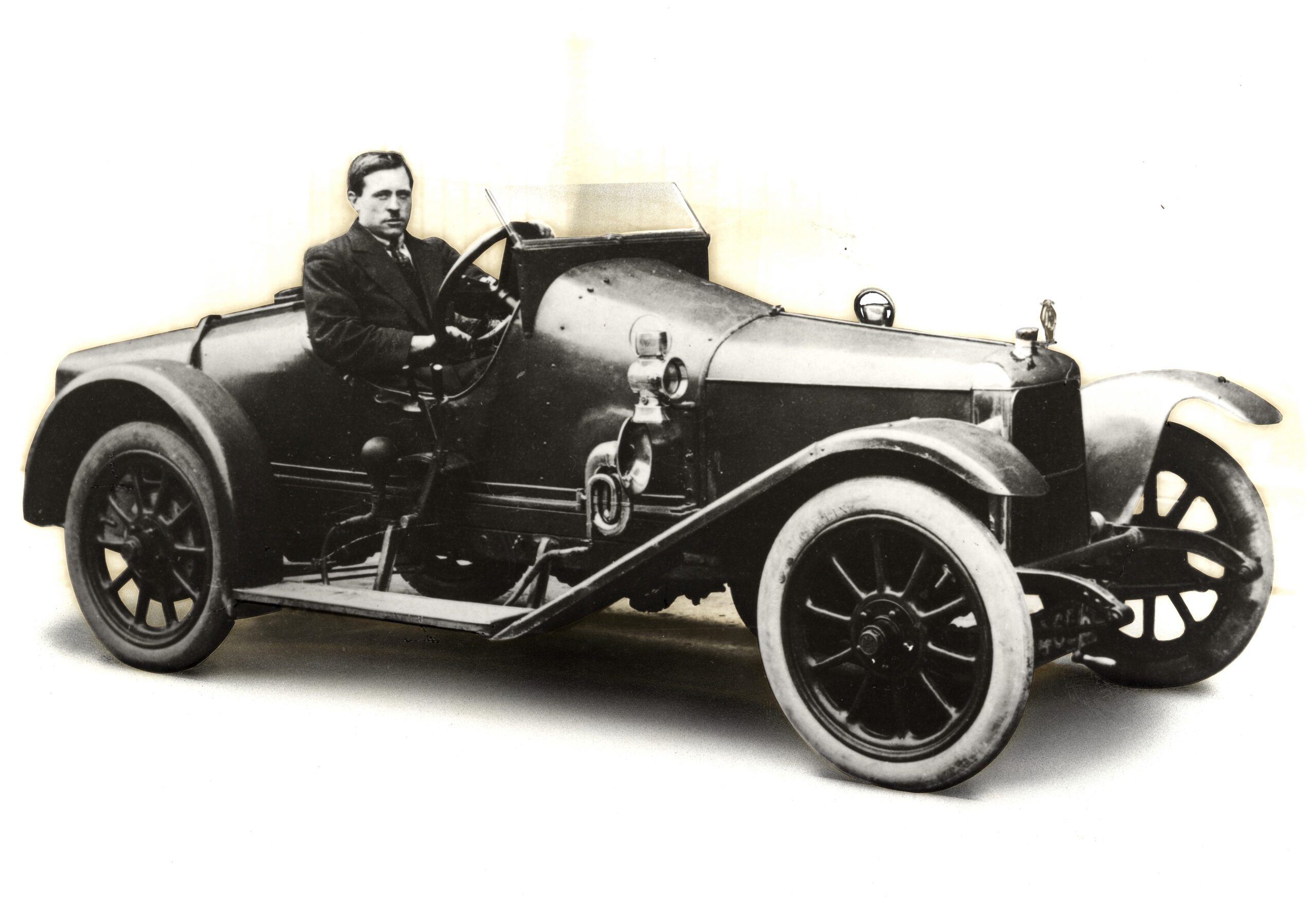
That project became the car now known as the “Coal Scuttle,” built in 1914 and registered in 1915. It was not a finished or polished car, but a working one that was continually adjusted, improved, and tested. Addis, as an engineer, was central to that process, turning ideas into something that could perform on the road.
The outbreak of the World War I interrupted this early work. The workshop’s machinery was transferred to the Sopwith Aviation Company, and Addis spent the war years working there. Like many early motoring ventures, Aston Martin’s future at that point was uncertain.
After the war, the company regrouped. By 1919, it had returned to competition, and that is where this story comes into focus. Addis drove the Coal Scuttle in the MCC London to Edinburgh Trial, an event that tested the endurance and reliability of the car over long distances, difficult roads, and strict time schedules.
The car completed the trial successfully and was awarded a Gold Medal. This was Aston Martin’s first significant success in competition.
That moment is captured in the medal, that is now part of the Trust’s collection. Small and easily overlooked, it represents the point at which a new and unproven company demonstrated that its engineering could stand up to real conditions.
The bumper badge tells the same story in a more outward way. Where the medal records the achievement, the badge announces it. Designed to be fixed to a car, it would have signalled that this vehicle and its driver, had already been tested and proven.
Other items that the trust has acquired point to Addis’s continued involvement in motoring and racing in the years that followed, including activity at Brooklands. However, it is these two pieces that most clearly connect to this early milestone.
The Coal Scuttle continued to be used and developed into the early 1920s, appearing in competition and undergoing further modification. Addis remained with the company and later became head engineer during that decade.
Today, these objects form part of the Aston Martin Heritage Trust collection. They provide a direct link to one of the earliest moments in the company’s history, and to one of the people who made it possible… Jack Addis!
Early Aston Martin was shaped not only by its founders, but by the engineers who built, tested, and drove its cars.
And sometimes, that contribution survives in something as small as a medal and the story it carries.
Clare Hirst – Collections Manager